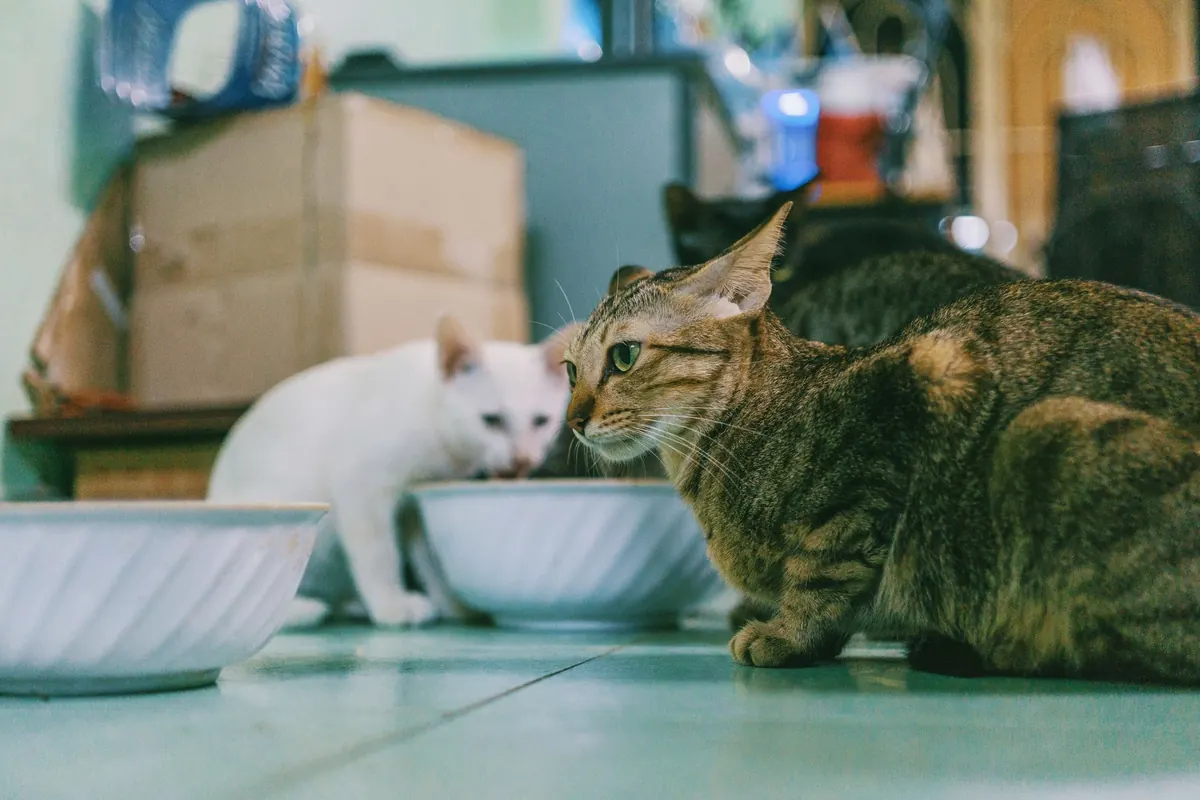
Choosing a pet food should be a two-minute job. In practice it means standing in an aisle with two bags in one hand and a tin in the other, trying to work out whether the £48 bag is genuinely better than the £12 one or simply better photographed.
The information you need is already printed on the pack — just arranged to sell rather than to explain. Once you know four things to look at, the front of the label stops mattering.
First, what you are actually comparing
The three main formats differ most in water, and that single fact causes nearly all the confusion about protein.
Dry food
Kibble is convenient, shelf-stable, easy to portion and usually cheapest per meal. It holds only around 8–12% moisture, which is why its protein percentage looks impressive next to a tin.
Wet food
Tins, trays and pouches are typically 70–80% water. That makes the numbers on the back look small, and it makes the food useful for hydration — particularly for cats, who are naturally poor drinkers and often run a little dry on kibble alone.
Raw
Raw arrives frozen, fresh or freeze-dried, and varies enormously in how it is put together. Some products are complete; others are meat and bone that need extras added. If you feed raw, especially to a puppy, kitten or a pet on medication, talk it through with your vet first. Mineral balance takes care to get right, and food hygiene matters more than it does with kibble.
Ingredient order is a weight list, not a ranking
On UK and EU labels you will usually find ingredients under "Composition", listed in descending order by weight. Crucially, that is weight as it goes into the mixer — water included.
This is where "Fresh chicken 30%" at the top of a dry food label earns its place. Fresh chicken is roughly 70% water. Once the kibble is dried, that 30% becomes a much smaller share of the finished product. The protein you are actually feeding may come mostly from chicken meal further down the list, which is a concentrated ingredient and arguably the better one.
Two habits help here:
- Look for named sources. "Chicken", "salmon" or "lamb" tells you more than "meat and animal derivatives".
- Watch for one ingredient split into parts. "Chicken, chicken meal, chicken fat, chicken digest" is four entries for one animal, and splitting them pushes each one lower down the list.
Bracketed percentages — "Chicken (26%), rice (15%)" — are a good sign. They are optional on many products, so a manufacturer that includes them is usually confident about what is inside.
Protein percentages, and why the tin looks worse than it is
The back panel usually shows a "typical analysis": crude protein, crude fat, crude fibre, ash and moisture. "Crude" refers to the lab method, not to quality.
The trap is that these figures are measured as-fed, with whatever water the food contains. A wet food at 10% protein looks feeble next to a dry food at 26%. Convert both to dry matter and the picture flips.
To convert: divide the nutrient percentage by (100 − moisture), then multiply by 100.
- Wet food: 10% protein, 78% moisture → 10 ÷ 22 × 100 = 45% protein on a dry matter basis.
- Dry food: 26% protein, 10% moisture → 26 ÷ 90 × 100 = 29% protein on a dry matter basis.
Do the same for fat and ash. Ash is essentially the mineral content, and a very high figure is worth asking about. Fibre helps digestion but is not a quality marker in itself.
Dry matter maths tells you how concentrated a food is. It does not tell you how digestible the protein is, or what its amino acid profile looks like. Treat it as a fair comparison tool, not a verdict.
Words on the front that mean very little
Most of the loudest text on a bag is loosely defined. None of the following guarantees a better meal:
- Premium, super premium, holistic, ancestral, biologically appropriate. Marketing categories, not nutritional ones.
- Natural. A narrow term about ingredients, not about how the food was made or how it suits your pet.
- Vet-approved or recommended by vets. If no vet or professional body is named, the claim carries no weight.
- Human-grade. Meaningful only when the whole supply chain is certified to that standard.
- No fillers. Fillers is not a defined category. It is a word, not a measurement.
- Grain-free. A formulation choice, not a health upgrade. Most suspected food allergies in pets turn out to involve a protein rather than a grain, and any suspected allergy needs proper veterinary investigation rather than a guess in the pet shop.
- A large meat percentage. Ask whether it is measured fresh or dried, and which parts of the animal it covers.
Vegetables on the packaging tell you about the photographer, not the recipe.
The five things worth checking
- Complete or complementary. This is the most important line on the pack. "Complete" means the food meets the nutritional requirements for the stated life stage. "Complementary" means it is part of a diet only — feeding it alone leaves gaps.
- A named animal protein in the first two or three ingredients.
- A named fat, such as salmon oil or poultry fat, rather than a vague "animal fats".
- Moisture listed in the analysis, so you can do the dry matter maths.
- A clear best-before date and batch code, so the food is fresh and traceable.
Matching the format to the animal in front of you
Dry suits busy households, multi-pet homes and tight budgets. Wet suits cats who need the water, fussy eaters and pets who need a softer texture. Raw suits owners who
Photo: FOX ^.ᆽ.^= ∫ / Pexels