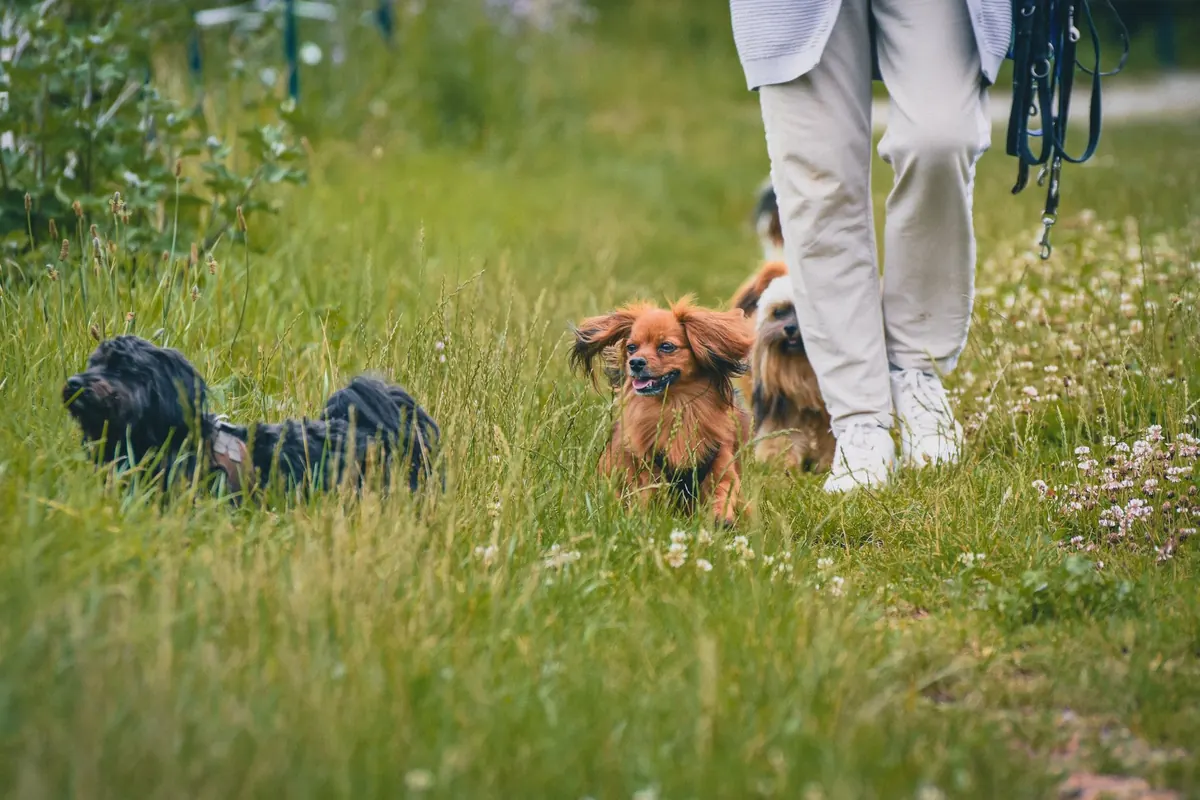
Ask any Devon dog owner about the first warm Saturday in March and you'll get the same story: a long walk on a coastal path, an evening on the sofa, and a tick crawling across the coffee table. Parasites here don't follow a neat British timetable. They follow the weather, and ours is mild, damp and stubbornly hospitable.
What follows is a working calendar rather than a rulebook. Use it to know what to look for, when to be more careful, and how a walk over Dartmoor or a potter along the South West Coast Path changes the odds.
Why Devon's seasons don't match the textbook
Most parasite advice is written for a colder, drier country. Devon is neither. Frosts are short and patchy, especially near the coast, and a mild wet spell in January can wake up ticks and slugs as easily as a warm May afternoon.
So two things follow. Protection generally runs all year rather than April to September, and risk rises and falls in waves instead of one summer peak. Your vet can recommend a product that suits your pet's age, weight, health and lifestyle, because flea, tick and lungworm cover don't always come in the same box. Lungworm prevention in particular is a prescription decision, not a shelf-pick.
March to May: ticks on the move, slugs on the path
Spring is when tick nymphs become active in rough grass, bracken and hedgerows. These are the small ones, roughly poppy-seed sized, and they're easy to miss. A nymph can feed, drop off and leave a red bump before you've found it.
At the same time, slugs and snails become genuinely busy after the first warm rain. Lungworm spreads when a dog eats an infected slug or snail, often accidentally while grazing grass, drinking from a puddle or mouthing a ball left out overnight. A single small slug is enough, and dogs are remarkably good at eating them without you noticing.
Start checking after every off-lead walk, and check yourself too. Ticks are not fussy about species.
June to August: the flea year starts indoors
Fleas get filed under summer, but the population inside a centrally heated home peaks in late summer and autumn. By August, a few fleas on the dog usually means eggs and larvae in the carpet, the sofa and the car boot.
Which is why treating the pet alone often fails. Vacuum hard, wash pet bedding on a hot cycle, and treat every cat and dog in the house with a product licensed for them. Never put a dog flea treatment on a cat: some ingredients, including permethrin, are seriously toxic to cats.
September to November: the second tick peak and wet-weather lungworm
Autumn here is warm enough for a second flush of tick activity and wet enough to keep slugs working right through November. Dogs spending their days in damp woodland, stream-side fields or shaded gardens are the ones to watch.
Keep up monthly lungworm prevention if your vet has advised it, and take note of a cough that lingers, unusual tiredness, weight loss, or unexplained bruising or bleeding. Lungworm is treatable, and early treatment is far easier. Ring your vet rather than waiting to see whether it settles.
December to February: don't stop yet
This is the trap. The weather turns, walks get shorter, and the tick treatment that ran out in November doesn't get renewed. Mild coastal days can bring ticks out in midwinter, and indoor fleas breed regardless of the forecast.
Keep the routine running. Short winter walks are a good chance to check ears, armpits, groin and between the toes, which are the spots ticks choose and the spots we check least.
Coastal paths and moorland tracks: how location changes the risk
Where you walk matters as much as when.
Coastal and estuary walks
Sea air and salt spray don't put parasites off. The coast has milder winters than inland Devon, and dunes, cliff-top rough grass and estuary hedgerows are ideal tick habitat, with birds, foxes and grazing animals moving through them. A January stroll around a headland is not a risk-free zone.
Dartmoor and Exmoor
Moorland holds sheep, ponies and deer, and with them a heavy tick population. Bracken, heather and long grass in spring and late summer are the highest-risk terrain, so check thoroughly after any off-path wander. Adders live on Dartmoor too; bites are uncommon and the snakes are shy, but if one bites your dog, keep them calm and quiet and contact your vet straight away.
Gardens, parks and village lanes
Lungworm risk lives here as much as anywhere. Slugs shelter in damp shade, under plant pots, in long grass and around compost heaps, and foxes carry the parasite through gardens at night. Bring bowls, toys and chews indoors.
A month-by-month routine you can actually keep
- Every week: run your hands over your dog, especially after wet weather, and look for scabs, bumps or itchiness.
- After every off-lead walk: a two-minute check of ears, neck, armpits, groin, paws and tail base.
- Every month: give whatever treatment your vet recommended, on the same date each month. Write it on the calendar and set a phone reminder.
- Twice a year: review cover with your vet. Puppies, older pets, pregnant animals and pets on other medication all need a different conversation.
- All year: vacuum regularly, wash bedding, keep grass short around the back door, and don't leave food bowls outside.
Five minutes that make the difference
If you only adopt one habit, make it the post-walk check. Use fine-tipped tweezers or a proper tick tool, grip close to the skin, and pull steadily upwards without twisting or squeezing. Don't smother the tick in oil or burn it off. Clean the bite afterwards, and if the mouthparts stay behind or the area looks infected, let your vet take a look.
And if you're new to Devon, or you've moved from a drier part of the country, book a short chat with your vet about what your pet is actually covered for. Parasite advice here is genuinely local, and it's worth ten minutes.